Trust: A Playful Font for Creative Branding
I was recently working on a branding project for a small bakery, and I found myself staring at a blank brand board, unsure of how to bring the whimsical charm of the concept to life. The owner wanted something approachable, friendly, and just a little bit fun. That’s when I discovered Trust, a decorative font that immediately caught my eye with its cute and funny personality.
A Whimsical Typeface for a Lively Brand
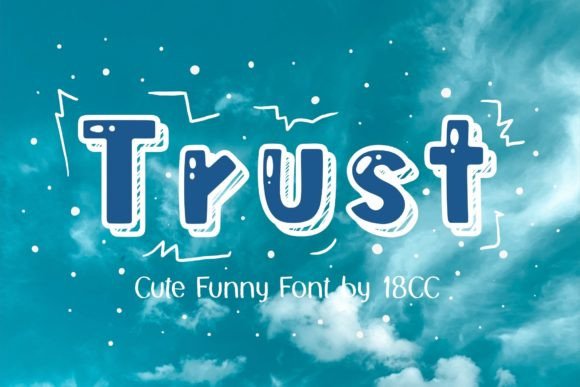
Trust is exactly what it sounds like—playful, light-hearted, and full of character. It’s a decorative font with rounded edges, soft curves, and a touch of whimsy that makes it feel almost hand-drawn. The letterforms are charmingly inconsistent in their weight, which gives them a sense of movement and warmth. This isn’t a font you’d use for a corporate annual report; instead, it’s perfect for projects that need a lighthearted visual accent.
The font has a very distinct mood—it feels like a child’s handwriting that’s been gently refined into something more professional yet still playful. The uppercase letters have a slightly exaggerated flair, while the lowercase letters are more subdued but still maintain that same fun energy. It's ideal for logos, packaging, and social media where a pop of personality is needed without overshadowing the message.
Testing Trust in Real Design Contexts
I tested Trust across several design elements for the bakery project. On the logo draft, it worked beautifully as a headline font, adding an inviting tone to the brand name. When paired with a clean sans-serif font for body text, it created a nice contrast that didn’t feel jarring. The font looked great on a packaging mockup too—printed on a box label, it gave the product a sense of friendliness that aligned perfectly with the brand’s identity.
On the business cards, Trust added a personal touch, making the contact information feel more like a handwritten note than a standard card. For the website header, I used it sparingly, ensuring it didn’t become overwhelming. And on Instagram posts, it helped create a cohesive look across all social media graphics.
However, I noticed that using Trust for long blocks of text or in smaller sizes could be problematic. It lacks the clarity and legibility required for extended reading, so it's best suited for short phrases, headlines, or accents rather than body copy.
Font Pairing and Practical Use Cases
When pairing Trust with other fonts, I found that it works particularly well with a modern sans-serif like Montserrat or a classic serif like Georgia. These pairings balance out the playful nature of Trust with more structured typography, allowing it to shine without overpowering the rest of the design.
This font is especially useful for creative projects that require a fun accent. Think book covers, posters, merchandise, logotype, and even editorial design. It adds a sense of approachability and can help make a brand feel more relatable and human. However, if your project demands professionalism or readability in large volumes of text, this might not be the best choice.
It’s also worth noting that Trust comes with several styles and alternates, giving designers flexibility in how they use it. Whether you're looking for swashes, ligatures, or different weights, there’s likely an option that fits your needs. Just be sure to check the licensing terms before using it in client work, especially if you plan to include it in templates, websites, or print-on-demand products.
Final Notes on Using Trust
If you're designing for a brand that wants to stand out with a touch of humor or charm, Trust is a great addition to your toolkit. It’s not a font for every project, but when used thoughtfully, it can elevate a design and make a lasting impression. Always test it in different contexts before finalizing a project, and remember to pair it with fonts that complement its style without clashing.
For those who are new to decorative fonts, Trust offers a gentle introduction to the world of expressive typography. It’s a reminder that sometimes, the most effective designs aren’t the most serious—they’re the ones that feel authentic and fun.